The Seat Beside the Patient: A Design Detail Often Overlooked
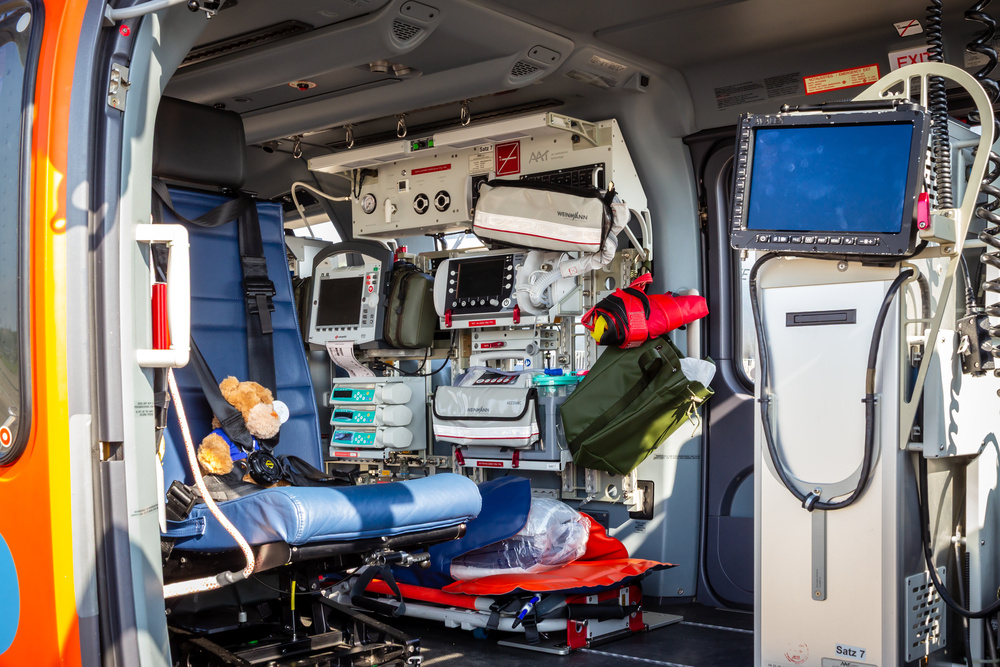
Anyone involved in air medical transport knows the patient is vital to the flight process. It is important to confirm that the stretcher is securely locked, all monitors are functioning properly, and the whole team is prepared to assist before the doors close. Depending on the aircraft, the nurse will manage oxygen, ventilators, and storage. In these conditions, the crew seat is often overlooked. The position and movement of the seat affect virtually all the activities performed by the nurse in the back of the aircraft.
Reasons for Prioritizing the Seat
Most of the time during a flight, the crew seat serves as the medical staff’s workplace where he/she controls the breathing rate, adjusts the drips and watches the monitor. If the position of the seat is too far from the patient or not adjusted correctly, the nurse will fail to see the patient’s face or even stretch in order to access the airway. This situation can cause serious issues during a 90-minute transfer with the patient whose condition changes rapidly. Furthermore, minor shifts in skin tone or breathing can be overlooked.
Comfortable Position and Fatigue
The flight crews tend to perform their duties within 12- or 24-hour shifts, and sometimes the missions may follow each other. Sitting in a twisted position for an hour at a time leads to neck strain and backache. This is the main reason why many experienced nurses abandon air transport as their workplace.
Read More: What Businesses Should Know Before Launching a Private Label Health Product
The exhaustion experienced by clinical workers is significant in a different context. The tired nurse may underestimate the dose of medicine or miss the changes in the patient’s state. Lumbar support and adjustable headrest cannot resolve all problems; however, it definitely helps.
Safety During the Flight
Some types of aircraft require unbuckling in order to reach the patient because the crew seat is far away. Turbulence and a rough landing can injure anyone who isn’t buckled up at the time. One of the clearest safety measures in such situations is offering the crew seat that permits access to the patient without the need to unbuckle. From a safety perspective, having a crash-tested seat with a 4- or 5-point harness is beneficial.
Design of the Crew Seating
According to the experts at LifePort, a medical helicopter interior works best when crew seating is planned alongside the stretcher and equipment, not squeezed in after everything else has been fitted. The seat can slide, swivel, and recline, permitting leaning in towards the patient and then reclining back. Having storage space in the vicinity of the seat also helps. Thus, if the crew can reach gloves, flushes or bag-valve mask without getting up, it ensures better safety and reaction speed.
Seat for the Family Member
The passenger is not always a part of the medical staff. Sometimes, there is a parent with a sick child, or adult son with his elderly mother, who need a seat as well. The correct position of the seat is crucial in such situations: if it is too far away, the family member is unable to comfort the patient, and if it is too close, the relative may get in the way of the crew. The ideal solution hinges on how large the cabin is.
Conclusion
The crew seat is often overlooked because it does not serve the same purpose as the stretcher or the monitor. Nevertheless, it is where your crew does all the work. Do not forget about it when planning the interior of the cabin. With the right design, your nurses and paramedics will be able to remain buckled, observe the patient and complete their work with no pain.
Read More: Fitness as Energy Management According to Tennessee Men’s Clinic